02 — projects
Projects
Middle frontal gyrus
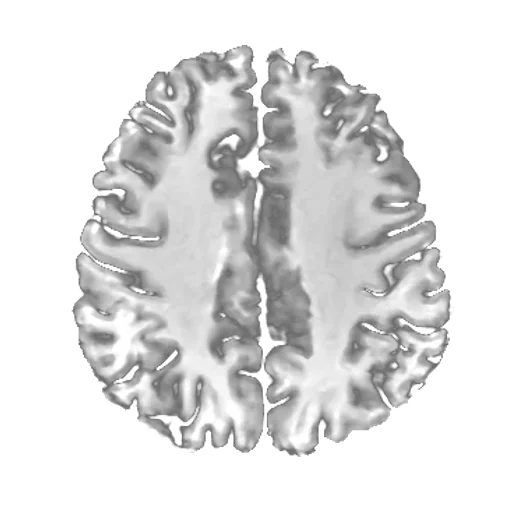
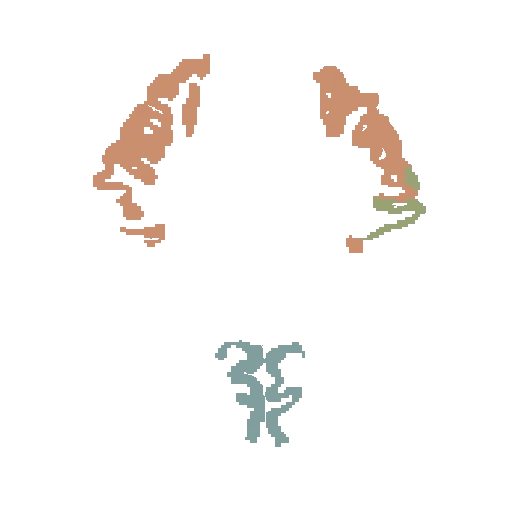
Lateral frontal lobe, both hemispheres. The front part roughly corresponds to dorsolateral prefrontal cortex, involved in working memory, planning and cognitive control. The rear part extends into premotor cortex.
see it on the brain →Some of this is my own, some came out of research, and some is my job. Roughly in that order.
Side projects
Qi (气). An object-oriented programming language you write in Chinese. Every language I had looked at was built on English, so I wanted to see what one built on Chinese would be like, and what would get harder. It's written in C, with a single-pass compiler, a stack-based virtual machine and automatic memory management. 400+ stars on GitHub. Docs.
GesturePresenter. Change slides with hand gestures. MediaPipe tracks your hands, and a Chrome extension, a React remote and a Flask/WebSocket backend handle the rest. 190+ stars on GitHub. Website.
AutoStegano. Hides one image inside another. The secret image is compressed first with singular value decomposition, treating each color channel as a matrix and keeping only its largest components, then embedded in the cover image's pixel values. The matrix math runs in Rust inside Web Workers, so the React interface stays responsive. It was my final project for a linear algebra course.
RayTracingToInfinity. A ray tracer in C++ with lighting, reflections and shadows. It handles glass, metal, matte and frosted materials; planes, spheres, disks, boxes, cones and cylinders; and any OBJ model, converted to a triangle mesh. Rendering on multiple threads made it up to 4 times faster. 80+ stars on GitHub.
This site. An MRI of my brain as the navigation, and a music page that draws simulated activity over the same slices in time with a song. I processed the scan myself, which included patching the ECLARE super-resolution model to run on Apple Silicon. Built with Next.js.
Research
fMRI decoding, awake and under propofol (CovConML).Huang Lab, University of Michigan. I train models to tell, from someone's fMRI, which kind of mental imagery they were asked to do. Then I test whether the same models, unchanged, still pick up that information after the anesthetic propofol has made the person unresponsive. Finding it wouldn't show the person was aware. I lead the project and wrote its analysis pipeline myself. I'm first author on the manuscript, which is in preparation, and I presented a poster on the work at Michigan's 2026 Anesthesiology Research Retreat.
SonoMap.Huang Lab. An interactive evidence map of human experiments with low-intensity focused ultrasound, a noninvasive way to modulate activity in targeted parts of the brain. It's built so other researchers can submit new studies. I'm the lead developer. It accompanies a systematic review, now under review, on which I'm third author.
Rat EEG under prefrontal inactivation and anesthesia. Pal–Lee collaboration, University of Michigan. EEG recorded from rats while awake, after a drug (tetrodotoxin) temporarily silences part of the prefrontal cortex, under sevoflurane anesthesia, and in recovery. I work on the analysis: connectivity, meaning how signals at different recording sites move together, and criticality, meaning whether activity sits near a tipping point where cascades neither die out nor run away. I'm a co-author on the manuscript, which is in preparation.
AugLoss. Sankar Lab, Arizona State University. A fine-tuning method that combines data augmentation with robust loss functions, to handle noisy training labels and test data that differs from what the model was trained on. The revision needed experiments on far more data than the existing pipeline could handle. I re-engineered its PyTorch data loader with multithreading and in-memory storage, for a 7-fold runtime speedup. That made the revised paper's experiments on datasets of up to 100,000 images feasible. I'm second author on the preprint.
Software reviews. I built the browser-based collection workflow for the 36,000-review G2 dataset behind a peer-reviewed study in IEEE Access (2022). I'm second author.
Work
PayPal· software engineer since July 2026. I designed and built the escalation and ticket-drafting workflow for the public-cloud help channel's bot, and an LLM tool that analyzes and prioritizes the cloud-request queue. Before that I interned on PayPal's public cloud infrastructure team in 2024 and 2025.
6Keywords· technical co-founder since November 2025. Law-firm intelligence built from public web data. I'm the sole architect: data collection, the processing pipeline and the infrastructure on GCP, plus an MCP server that lets AI agents work with the data.
More code on GitHub.